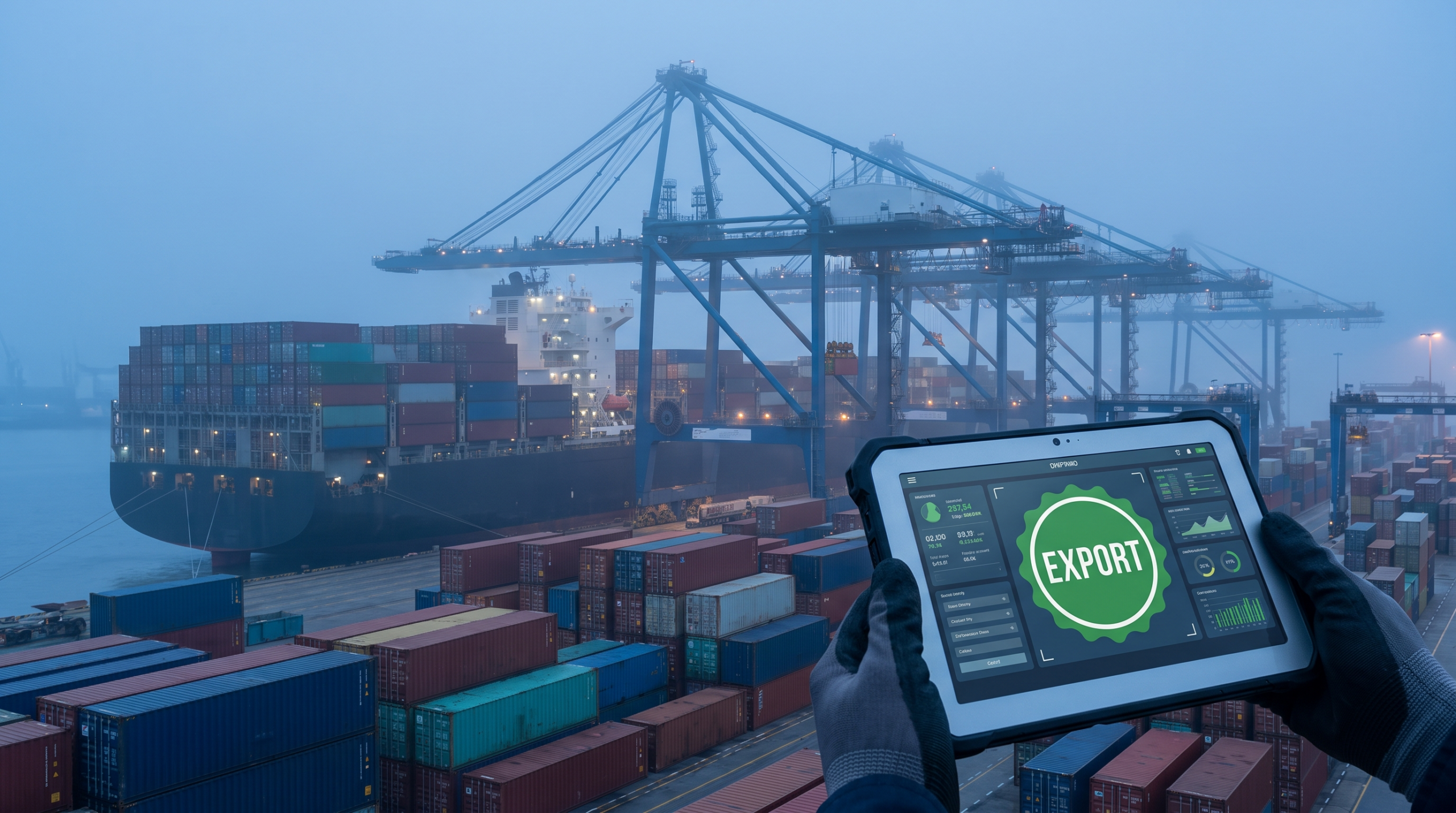
Will DIWASS cover waste exports outside the European union?
Intuition suggests that an EU digital system ends where the Union ends. In case of waste shipments, that intuition fails. Exports outside the Union fall within DIWASS – and under a stricter regime than shipments between Member States. For exporters, this means a double challenge: a new digital tool and substantially tightened rules.
Have any questions about registering with DIWASS? Contact us:
e.nadolna@ekologistyka24.pl , +48 881 045 376
j.blazewicz@ekologistyka24.pl , +48 500 867 153
Or click HERE to learn more
Scope of the system – DIWASS does not stop at the EU border
The use of DIWASS is mandatory for all EU entities involved in the cross-border shipment of waste. The key point, however, is that the term “cross-border” covers three directions:
- intra-EU shipments – between Member States,
- exports and imports – involving third countries,
- transit – through the territory of the EU or third countries.
The only thing left outside the system’s scope is domestic waste transport, which continues to be governed by national regulations (in Poland, among others, BDO and SENT). Importantly, entities from third countries must also be registered in DIWASS in order to be designated in the procedures – without the registration of a foreign consignee, an export notification cannot be properly completed.

Exports outside the EU – a stricter regime and a calendar of bans
Digitalisation is only one layer of the changes. In parallel, Regulation (EU) 2024/1157 restructures the substantive rules on exports, differentiating them according to the status of the destination country:
OECD countries. The export of non-hazardous waste remains possible, although for plastic waste the prior written notification and consent procedure (PIC) applies. The notifier must obtain written confirmation from the authorities of the country of dispatch, destination, and transit before export. From 21 May 2026, these notifications are submitted through DIWASS.
Non-OECD countries. Here, the restrictions go furthest:
| Date | Change |
|---|---|
| 21 May 2026 | Exports of plastic waste (code B3011) to non-OECD countries subject to the notification procedure in DIWASS |
| 21 November 2026 | Total ban on exports of B3011 waste to non-OECD countries |
| 21 May 2027 | Ban on exports of non-hazardous waste to non-OECD countries (Art. 40) and the obligation to have the destination facility audited by an independent third party; repeal of Regulation (EC) No 1418/2007 |
| 21 May 2029 | Non-OECD countries may notify the Commission of their readiness to accept B3011 waste; exports possible only to countries on the list under Art. 41 |
The export of hazardous waste to non-OECD countries remains prohibited. What is new, however, is the shift of the burden of verification onto the exporter: it is the exporter who must demonstrate that the destination facility manages waste in an environmentally sound manner, confirmed by an independent audit.
Practical examples – three export scenarios
Scenario 1: A recycler ships processed plastics to Malaysia. Until 21 November 2026, the export requires a full notification through DIWASS. After that date, the export becomes impossible at least until 21 May 2029, and thereafter only on condition that Malaysia is entered on the EU list. Practical takeaway: contracts extending beyond November 2026 require renegotiation or a change of destination to an OECD country.
Scenario 2: Export of waste paper to Turkey (an OECD country). The shipment remains permissible, but from 21 May 2027 the exporter must hold an up-to-date audit of the Turkish facility carried out by an independent third party. The notification documentation passes through DIWASS, and the registration of the Turkish consignee in the system becomes an operational condition for the entire chain.
Scenario 3: An RDF producer is considering exporting alternative fuel outside the EU. RDF produced from mixed municipal waste is subject – pursuant to Art. 4(3) of the Regulation – to the same regime as mixed municipal waste, if the processing has not significantly changed its properties. In practice, the exporter must document the origin of the waste stream before even starting the procedure in the system.
The customs border is not the border of responsibility
DIWASS will cover waste exports outside the Union – and it is precisely in this area that the system will show its full regulatory force. The exporter’s responsibility no longer ends at the customs border. It extends all the way to the destination facility on another continent. Companies exporting waste should therefore read DIWASS not as an IT tool, but as an element of a broader strategy – and one whose deadlines call for action today.
Author: Jakub Koszyński | Edited by: Paweł Makowski