
Cross-border waste shipment in 2026: important changes
Cross-border waste shipment will undergo major changes in 2026. The European Union is implementing restrictive regulations aimed at tightening the system and supporting the circular economy. Transport companies must adapt their procedures to the new requirements to avoid heavy fines and operational downtime. Effective adaptation requires not only legal knowledge but also investments in modern cargo monitoring technologies.
WASTE TRANSPORT PERMITS ARE ONLY THE FIRST STEP.
WHAT WILL CHANGE FROM 21 MAY 2026?
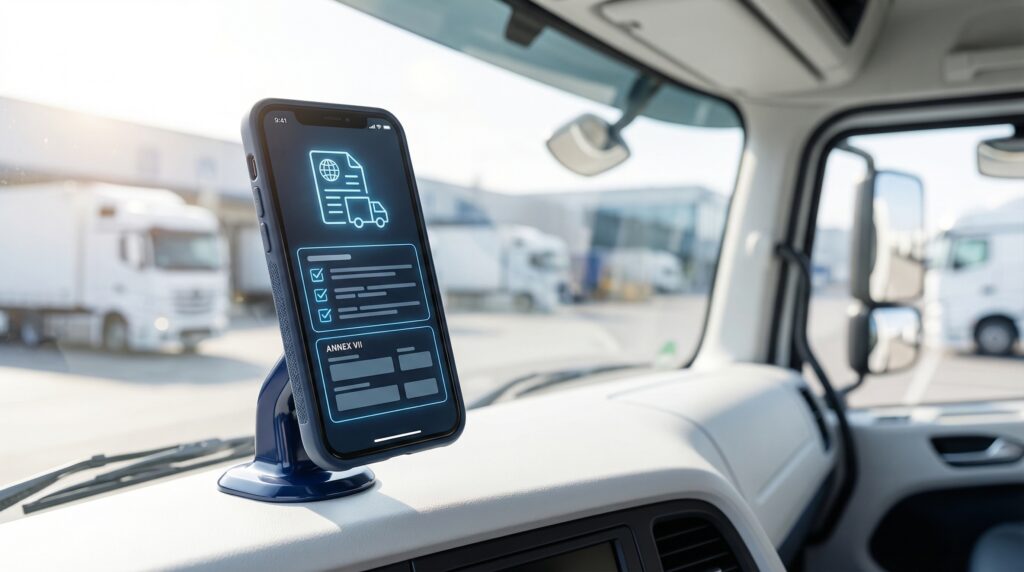
From 21 May 2026, waste shipments involving an EU Member State will move to DIWASS. This means that having waste transport permits alone will no longer be sufficient. Shipment procedures and documentation will be handled electronically, including Annex VII documents and digital workflows related to notification procedures. Do not wait until the deadline. Act now and make sure your business is ready for compliant future shipments. Contact us for more information about DIWASS implementation:
e.nadolna@ekologistyka24.pl , +48 881 045 376
j.blazewicz@ekologistyka24.pl , +48 500 867 153
New legal framework for 2026

The EU now mandates that transport only occurs to certified treatment facilities, effectively eliminating unfair competition from non-compliant entities. Carriers must rigorously verify the recipient’s status and cargo type before departure.
Since many waste fractions that previously fell under simplified rules now require full authorization, logistics planning must account for longer lead times to obtain permits. Companies ignoring these details risk border stoppages and heavy financial sanctions.
Stricter rules for plastic waste
The 2026 regulation introduces revolutionary changes for plastic waste movements. Most plastic fractions no longer qualify for simplified procedures. Carriers must verify if plastic loads are clean and properly sorted. Shipping contaminated plastics to non-OECD countries is now strictly prohibited. These changes aim to eliminate illegal waste dumping outside Europe. Companies must prepare for much more rigorous customs inspections.
Cross-border waste shipment in 2026: digitalisation and central notification
The most significant revolution is the mandatory transition to electronic document circulation via the EU digital hub. Traditional paper forms will lose their legal validity in international traffic, necessitating an upgrade to IT infrastructures.
Key features of the new digital system include:

What is DIWASS?
DIWASS stands for Digital Waste Shipment System. It will replace all paper-based notification systems across the European Union. All Member States will have to use this central digital hub. Carriers would be obligated to upload digital Annex VII documents before any vehicle departs. The system will allow authorities to monitor every shipment in real-time.
It’s in the carrier’s best interes to synchronize internal IT systems with this platform as soon as it becomes available.
Vehicle’s technical requirements
Proper fleet marking remains a priority. Vehicles must display visible warning plates according to specific Member State standards, and drivers must have digital permits available on mobile devices for immediate inspection.
Furthermore, trailers and containers are subject to stricter assessments regarding tightness and load securing. The carrier is responsible for ensuring that transport does not generate odors or ecosystem threats. Regular technical inspections and certification of means of transport are now the foundation of safe waste logistics.
Liability and legal consequences
In 2026, penalties for illegal waste shipments have been harmonized across the EU. Fines are determined by the severity of the act and the carrier’s history of violations.
A critical shift is the application of joint and several liability across the supply chain; a transport company can be held liable for the costs of utilizing incorrectly reported waste if verification procedures were neglected. Serious violations can lead to the suspension of transport licenses and irreversible reputational damage. Consequently, investing in staff training and quality control is currently the most profitable business strategy.
Compliance checklist for transport companies
The compliance checklist below provides an overview of key points to verify prior to carrying out a waste transport in 2026.
Waste Transport Compliance Checklist
| Status | Category | Required Verification Elements |
|---|---|---|
| Contractor Verification | Validity of recipient’s environmental and recovery certificates. Verification of registration numbers in EU databases. | |
| Notifications and Permits | Active notification number in the DIWASS electronic system. Digital Annex IA / Annex IB documents available on mobile device. | |
| Financial Security | Confirmation of payment for financial guarantee or transport insurance. Guarantee amount complies with potential management costs. | |
| Fleet and Marking | Correct placement of “A” boards (or national variants). Vehicle equipped with GPS integrated with monitoring system. | |
| Driver and Training | Driver holds valid certificate for waste transport. Access to mobile application for real-time electronic documentation. | |
| Emergency Procedures | Written instructions for leaks or technical failures. Vehicle equipped with required sorbents and personal protective equipment (PPE). |
Applying the above guidelines significantly reduces operational risk in international freight traffic. If you need support in preparing digital documentation templates for your drivers, we can prepare the appropriate templates for you.
Author: Jakub Koszyński | Edited by: Paweł Makowski