
How long does it take to obtain a waste permit in the EU?
Navigating the waste permit acquisition process in EU in 2026 remains a strategic yet time-intensive prerequisite for scaling within the European circular economy. While the regulatory landscape is increasingly integrated, international investors must still contend with significant processing variations between individual member states. The authorization journey typically moves through document submission, technical review, and mandatory public consultations, requiring an expert grasp of both centralized directives and regional protocols. Understanding these realistic durations and the specific factors that influence application speed is essential for effective operational planning. This analysis highlights the current bottlenecks and accelerators to help operators navigate these legal requirements efficiently.
Avoid delays, rejections, and lost time
Work with experienced advisors and secure your waste permit in EU faster, without unnecessary delays:
e.nadolna@ekologistyka24.pl , +48 881 045 376
j.blazewicz@ekologistyka24.pl , +48 500 867 153
Understanding the EU waste permit framework
The foundation of waste regulation in Europe rests upon the Waste Framework Directive. This legislation sets the minimum standards that all member states must follow. However, the Directive allows individual countries to implement stricter rules or unique administrative procedures. Therefore, an EU waste permit issued in one country does not automatically grant operating rights in another. Each jurisdiction delegates regulatory oversight to its respective Competent Authority (CA), governing the licensure of the entire waste management lifecycle.
Recent updates in 2026 have introduced the Digital Waste Shipment System, known as DIWASS. This system aims to harmonize the exchange of data across borders. Nevertheless, the transition to digital-only submissions has created temporary bottlenecks in some regional offices. Applicants must now ensure their technical documentation aligns perfectly with these new electronic standards. Consequently, the pre-submission phase has become the determinative factor for success in the new digital-first environment.
General timelines for waste licensing
| COUNTRY | APPROXIMATE WAITING TIME FOR WASTE PERMIT |
| DENMARK | 1-2 working days |
| GERMANY | 1 week |
| SWEDEN | 3-4 weeks |
| POLAND | 4 weeks |
| CZECH REPUBLIC | 3-4 weeks |
| NETHERLANDS | 3-4 weeks |
| BELGIUM | depending on the region: Flanders – 1-2 days, Brussels – 3 weeks, Wallonie – 3-4 weeks |
Across Europe, the time required to obtain a waste transport permit varies significantly between jurisdictions. In Northern and Western European countries, procedures are generally efficient and well-structured. For example, in Denmark the permit can be issued within 1–2 working days, while in Germany the process typically takes around one week. In countries such as the Netherlands, Sweden, and the Czech Republic, the average waiting time is 3–4 weeks, with Poland remaining at a similar level of approximately 4 weeks. Belgium presents a more nuanced case, where timelines depend on the region—ranging from 1–2 days in Flanders to up to 3–4 weeks in Brussels and Wallonia.
These timelines reflect standard administrative processing under typical conditions. However, in practice, the duration can be significantly influenced by the quality of the application. Incomplete or incorrectly prepared documentation often leads to delays or the need for resubmission. For this reason, companies working with experienced advisors are frequently able to shorten the process and obtain permits more efficiently.
If you would like to verify timelines for other countries or determine the fastest and most reliable route for obtaining your permit, contact us for more details.
Key administrative factors causing delays
The primary cause of delay in 2026 is the lack of digital readiness among certain local municipalities. While the EU mandates electronic systems, the integration between national databases and the DIWASS platform is not yet seamless. Consequently, many officials still perform manual checks on digital files. This redundancy increases the time required for the initial validation of the EU waste permit application. Operators frequently encounter wait times simply because their digital signatures do not match local encryption standards.
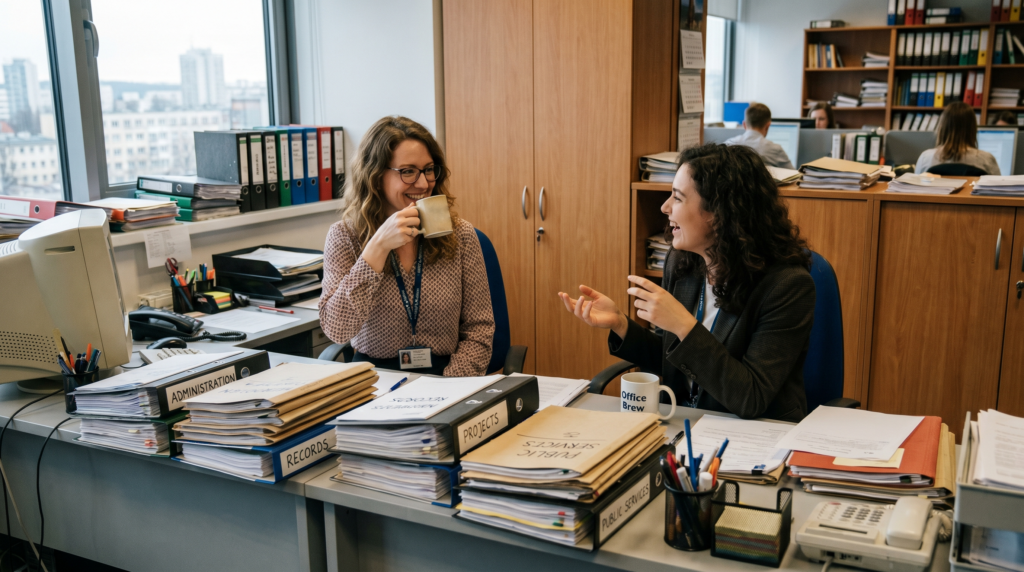
In addition, staffing shortages within environmental agencies contribute to the backlog. Many experts have moved to the private sector to help companies comply with new sustainability reporting rules. As a result, the remaining civil servants handle much larger caseloads. This imbalance often leads to a “stop-and-start” rhythm where your application sits untouched for weeks. To avoid this, you should maintain regular communication with your assigned case officer to ensure your file remains a priority.
Complexity levels of different waste categories
The type of material you handle dictates the difficulty and duration of the permit process. Non-hazardous materials, such as paper or clean plastics, undergo a simplified “green list” procedure. These applications focus primarily on logistics and storage capacity. Conversely, hazardous waste requires a much more intensive scrutiny. Authorities must verify your decontamination protocols, emergency response plans, and financial guarantees.
Additionally, the 2026 regulations have added new categories for electronic waste and lithium-ion batteries. These materials require specialized permits due to their fire risk and chemical complexity. If your business deals with these items, expect the technical review to be the longest part of your application. The inspectors will likely conduct multiple site visits before issuing the final document. Therefore, you must ensure your facility meets all Best Available Techniques (BAT) standards before submitting your file.
Streamlining the application process
To accelerate your EU waste permit acquisition, you should invest heavily in the pre-submission phase. Hiring an environmental consultant is often the most effective way to navigate regional quirks. These experts understand the specific expectations of local inspectors and can spot errors before they reach the agency. Moreover, providing high-quality technical drawings and waste flow diagrams reduces the need for “requests for further information”.

Furthermore, utilizing the new 2026 digital tools correctly can shave weeks off your timeline. Ensure your company is pre-registered in the relevant national and EU databases well in advance. Gathering all necessary insurance certificates and financial bonds early also prevents last-minute hurdles. Ultimately, a complete and well-organized application signals professional competence to the regulator. This trust can lead to a more collaborative and faster review process.
Future outlook for EU waste management permits
The European Union’s “Better Regulation” agenda is accelerating administrative streamlining, with the DIWASS system expected to minimize manual intervention by late 2027. Currently, operational resilience hinges on prioritizing high-quality data and environmental protection rather than treating compliance as a mere legal hurdle. While permit lead times are still significant, they can be managed through rigorous pre-submission planning and a deep understanding of the 2026 digital transition.
Author: Jakub Koszyński | Edited by: Paweł Makowski